


High-performing teams don’t work harder. They work in spaces designed for clarity. And that clarity influences output more than we often realize.
In today’s evolving work landscape, workplace design is no longer a secondary consideration. It directly influences how individuals and teams operate throughout the day. Before a task begins or a conversation unfolds, people are already responding to their surroundings.
The workplace environment shapes how teams move, how they collaborate, and how effectively they maintain momentum. When designed with intention, it becomes a quiet driver of performance.
Why Workplace Design Influences Team Performance
Performance is not only a function of skill or effort. It is also shaped by context.
A well-structured workplace design reduces friction at every level of the workday. Clear spatial organization, balanced layouts, and intentional flow allow teams to operate with less resistance.
This directly impacts:
- Workspace efficiency, by minimizing unnecessary movement and disruption
- Office design productivity, by supporting sustained focus
- Employee productivity design, by aligning the environment with how people naturally work
When these elements are missing, even high-performing teams begin to compensate for the space around them. Small inefficiencies accumulate, slowing decision-making and reducing overall output.
Workplace Design as a Foundation for Collaborative Workspace Performance
Collaboration is often associated with openness, but openness alone does not guarantee results.
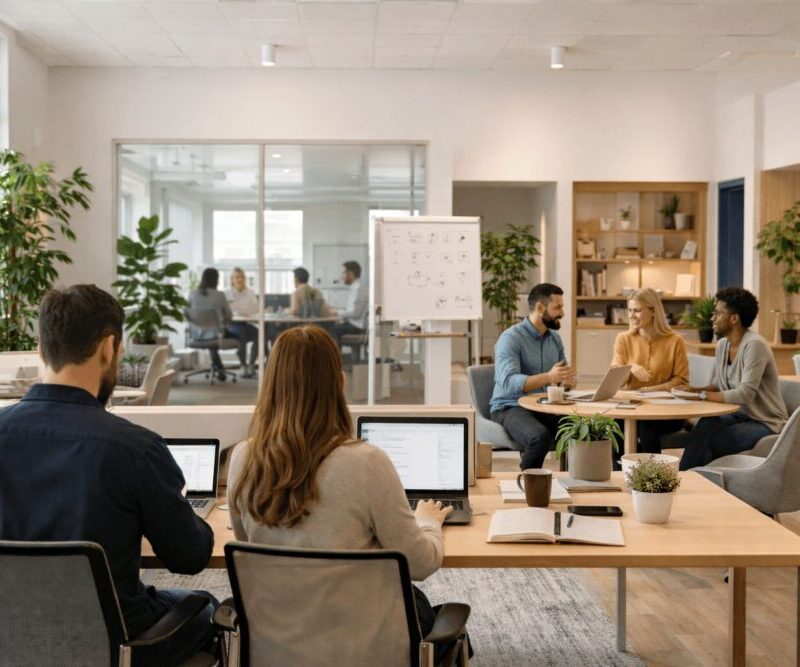
An effective collaborative workspace is structured, not just accessible. It provides clarity on where interaction happens and where focused work is protected.
This is where office layout strategy becomes critical. When environments are thoughtfully zoned and visually balanced — using elements like vertical plantscaping and natural dividers to define zones:
- Teams transition seamlessly between collaboration and focus
- Conversations happen without disrupting surrounding work
- Shared spaces feel intentional rather than reactive
When workplace flow is aligned with how teams operate, collaboration becomes more effective and less disruptive.
The Role of Biophilic Workplace Design in Productivity
A high-performing environment is not only efficient. It is also supportive.
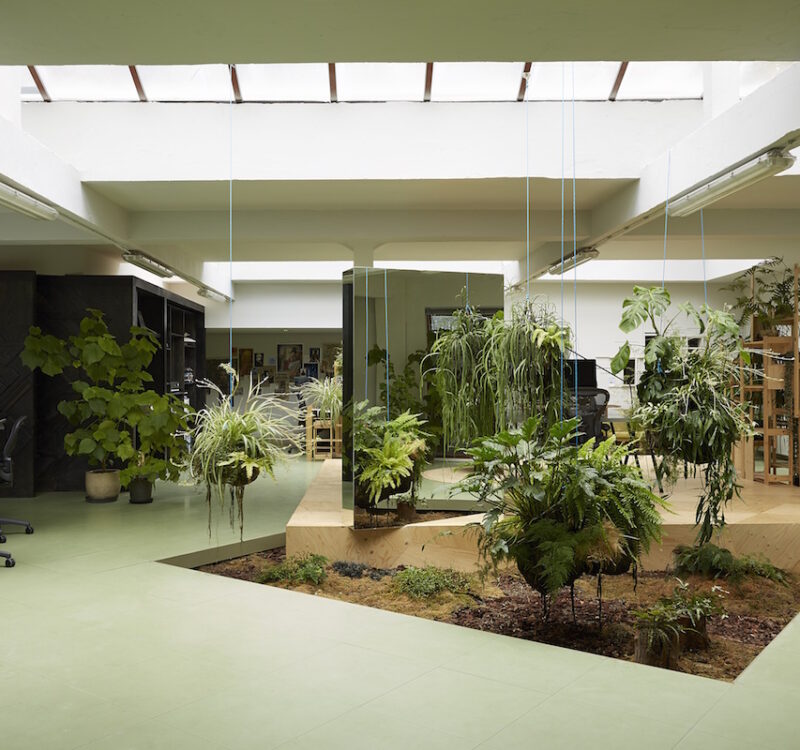
A biophilic workplace introduces natural elements that reduce visual fatigue and create a more balanced sensory experience. This contributes to a healthy office design that supports sustained energy throughout the day.
In modern office interiors, these elements are not decorative. They are part of a broader approach to performance, where the environment supports both physical comfort and cognitive clarity. Integrating features like moss walls and preserved greenery softens rigid structures and introduces natural variation, enhancing how teams experience the space over time.
Workplace Design as a Strategic Business Tool
Organizations often invest in systems, technology, and processes to improve performance. However, the physical environment is just as influential.
Effective commercial interior design recognizes that space actively shapes behavior. It influences how quickly teams can align, how easily they can focus, and how consistently they can perform.
When workplace design is approached strategically — incorporating outdoor plantscaping for exterior impressions and indoor greenery for interior wellness — it:
- Supports faster, more efficient workflows
- Reduces friction between tasks and teams
- Enhances overall team performance and productivity
- Reinforces a culture of clarity and intentionality
In this context, design becomes part of the organization’s operational infrastructure.
A Shift in How We Measure Productivity
Productivity is often viewed through the lens of output. But output is shaped by the conditions that support it.
When environments are designed for clarity — through intentional layout, natural materials, and living green walls that reduce stress:
- Teams maintain focus for longer periods
- Transitions between tasks feel seamless
- Collaboration happens with less disruption
The result is not just improved efficiency, but more consistent and sustainable performance.
Workplace Design as a Driver of Performance
High-performing teams do not rely on effort alone. They rely on environments that support how they work.
At its core, workplace design is a driver of team performance and productivity. It shapes how people move, think, and collaborate throughout the day. When clarity is embedded into the environment, performance becomes easier to sustain.
The question is no longer whether design matters. It is whether your workplace environment is actively supporting your team — or quietly working against it. If you are ready to transform your workspace with nature-driven design, explore how Biozenic can help or get in touch for a free consultation.
Related posts

Bonsai Workshops in the Workplace: Enhancing Wellness and Focus
Why Balanced Workplace Design Creates Better Collaboration and Focus

Nowruz and Design: How Culture Influences Modern Interior Spaces
How Office Design Shapes First Impressions and Brand Experience

How Spatial Design Improves Collaboration in Modern Workplaces